
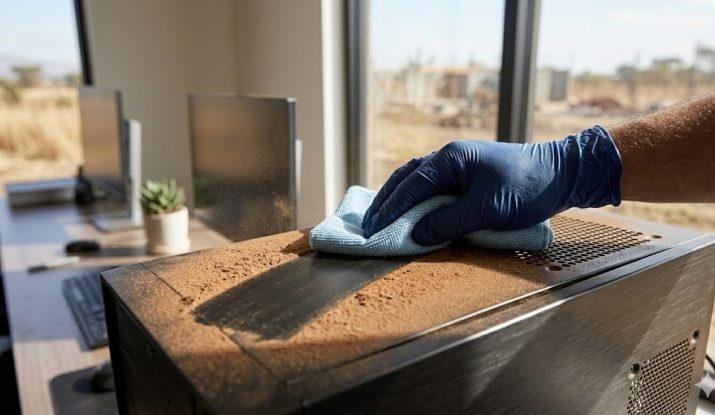
Nakuru is a vibrant, thriving business hub, and we love the energy here. But if you work in an office in Nakuru, especially during the dry season, you know there is one undeniable, persistent opponent: The Dust.
It’s not just “ordinary” dust; it is that unique, fine, volcanic silt characteristic of the Rift Valley. During Nakuru’s prolonged dry spells, the strong winds pick up this pervasive dust, turning the city’s air quality into a major challenge for businesses. It doesn’t matter if your windows are sealed shut—it finds its way in.
At SilverYard Cleaning, we’ve analyzed the specific environmental factors in Nakuru that create this unique dust problem. If you are noticing a decline in productivity, equipment failure, or rising employee sick days, the dust is likely the culprit.
The Anatomy of Nakuru Dust: The Silent Productivity Killer
The dry season in Nakuru exacerbates existing environmental issues, leading to an accelerated buildup of grime.
1. Nakuru’s Soil Composition: The Rift Valley Factor
Nakuru is built upon volcanic soil. When the ground dries out, this soil breaks down into incredibly fine, lightweight particles that are highly airborne. Unlike standard dust, this volcanic dust is abrasive and difficult to remove once it settles.
2. Construction Boom and Agricultural Silt
Nakuru is experiencing incredible growth, which means construction. New projects stir up significant amounts of topsoil and dust. Combined with agricultural silt blown from surrounding farms, the Result is a steady influx of fine particles into commercial spaces.
3. High Winds and Reduced Vegetation
During the dry months, the winds across the plains are stronger, and vegetation (which usually acts as a dust trap) dries out. There are fewer natural barriers to stop the dust from travelling directly to your office windows, vents, and doors.
Why a “Dust Management Strategy” is Crucial for Nakuru Offices
If your office cleaning schedule hasn’t changed since the wet season, you are fighting a losing battle. The dry season demands a proactive strategy.
1. Protecting Your Technology Investment
Fine volcanic dust is highly conductive and abrasive. It gets inside printers, server racks, and computer fans, causing overheating and costly hardware failure. Frequent cleaning is maintenance, not just aesthetics.
2. Employee Health and Productivity
This dust is a known respiratory irritant. When employees breathe it in all day, it leads to headaches, fatigue, and allergic reactions, directly impacting productivity and increasing absenteeism. A clean, fresh-smelling office keeps morale high.
3. Maintaining Professionalism and Client Trust
First impressions matter. When a client walks in and can see visible dust on your reception counter or conference table, it signals negligence. Cleanliness reflects your brand’s attention to detail.
The Dry Season Cleaning Checklist: The SilverYard Strategy
To combat Nakuru’s dust, you need to go deeper than a standard surface wipe.
| Target Area | Dry Season Frequency | Cleaning Strategy |
| Computers & Tech | Daily | Air dusting & anti-static microfiber wipes. |
| High Surfaces (Shelves) | Daily | Damping (not dry dusting) to trap particles. |
| Floors (Carpets/Hardwood) | Daily | Deep vacuuming with HEPA filters. |
| Windows & Vents | Weekly | Washing screens and wiping sills to prevent entry. |
Don’t Let the Dust Run Your Office
Fighting the fine volcanic dust of Nakuru’s dry season is relentless. Our professional teams at SilverYard specialize in deep-cleaning strategies tailored specifically to handle these unique environmental challenges. We preserve your equipment, protect your team, and maintain your professional image.
The Silver Cleaning Solution Challenge: Walk around your office right now and run your finger across the top of a computer monitor or a windowsill.
How thick is the dust? Be honest in the comments—are you winning the battle or is the dust winning?