
Most homeowners wait until they see a cockroach scurrying across the floor or a trail of ants in the pantry before they call for help. But by the time a pest is visible in the open, the “infestation” is often already well-established behind your walls.
At Silver Cleaning Solution, we know that professional fumigation isn’t just about the bugs you see—it’s about the damage you don’t. Some pests, like termites and bedbugs, are masters of disguise.
Here are five subtle, expert-level signs that it’s time to stop the DIY sprays and call in the professionals.
1. “Hollow” Wood or Quiet Clicking
Termites are the silent destroyers of the home. They eat wood from the inside out, often leaving the paint or outer veneer perfectly intact.
- The Test: Tap your wooden door frames, baseboards, or cabinets. If they sound hollow or papery, you likely have a structural issue.
- The Sound: Soldier termites actually bang their heads against the walls of their tunnels to signal danger. In a quiet room, you might hear a faint “clicking” coming from your walls.
2. Discarded Wings Near Windowsills
Have you noticed what looks like small, translucent fish scales on your windowsills or near entry points? These are likely discarded termite wings. “Swarmers” (winged termites) leave the colony to start new ones; once they find a mate, they shed their wings because they’ll never need to fly again. If you see wings, a new colony is likely being built inside your home right now.
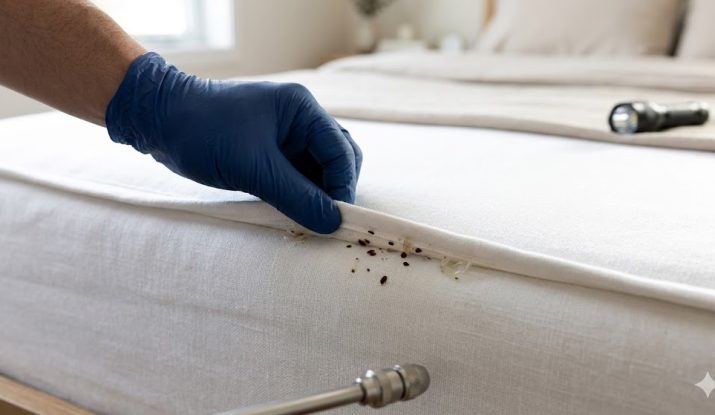
3. Tiny “Ink Spots” on Linens
Bedbugs are notoriously difficult to spot during the day. Instead of looking for the bugs themselves, look for their “signatures.”
- The Sign: Small, dark reddish-brown spots on your sheets, mattress seams, or even behind headboards. These are fecal spots (digested blood).
- Where to Look: Use a flashlight to check the piping and seams of your mattress. If you see dark spotting, a standard laundry cycle won’t be enough—you need professional heat treatment or fumigation.
4. “Mud Tubes” on Exterior Walls
Subterranean termites build specialized “mud tubes”—pencil-thick tunnels made of moisture and soil—to travel from the ground to the wood in your home without drying out. You’ll usually find these on the foundation of your house or in crawl spaces.
Warning: Breaking a tube may stop the termites temporarily, but they will simply build another one elsewhere. This is a clear sign that the soil around your home needs professional treatment.
5. Unexplained “Musty” or “Sweet” Odors
Pests don’t just leave visual signs; they leave a scent.
- Cockroaches: Often produce an oily, “musty” smell that lingers in cabinets.
- Bedbugs: Large infestations can emit a sweet, sickly odor similar to coriander or rotting raspberries.
- Rodents: A sharp, ammonia-like smell (urine) is a dead giveaway that mice or rats are nesting in your attic or crawl spaces.
Fumigation vs. Regular Spraying: What’s the Difference?
| Treatment | How It Works | Best For |
| Surface Spraying | Targets pests on contact or through residual barriers. | Occasional ants, spiders, or roaches. |
| Fumigation | Uses a gaseous pesticide (suffocant) to penetrate porous surfaces (wood, fabric). | Termites, wood-boring beetles, and severe bedbug infestations. |
Don’t Wait for the Damage to Double
Pests are a ticking clock for your property value. A small termite problem today can become a structural nightmare in six months.
Have you noticed any “mystery smells” or strange spots in your home lately? Don’t guess—get an expert eye on it.